Friday, October 18, 2013

Issue Task

Students should always question what they are taught instead of accepting it passively.

Write a response in which you discuss the extent to which you agree or disagree with the statement and explain your reasoning for the position you take. In developing and supporting your position, you should consider ways in which the statement might or might not hold true and explain how these considerations shape your position.

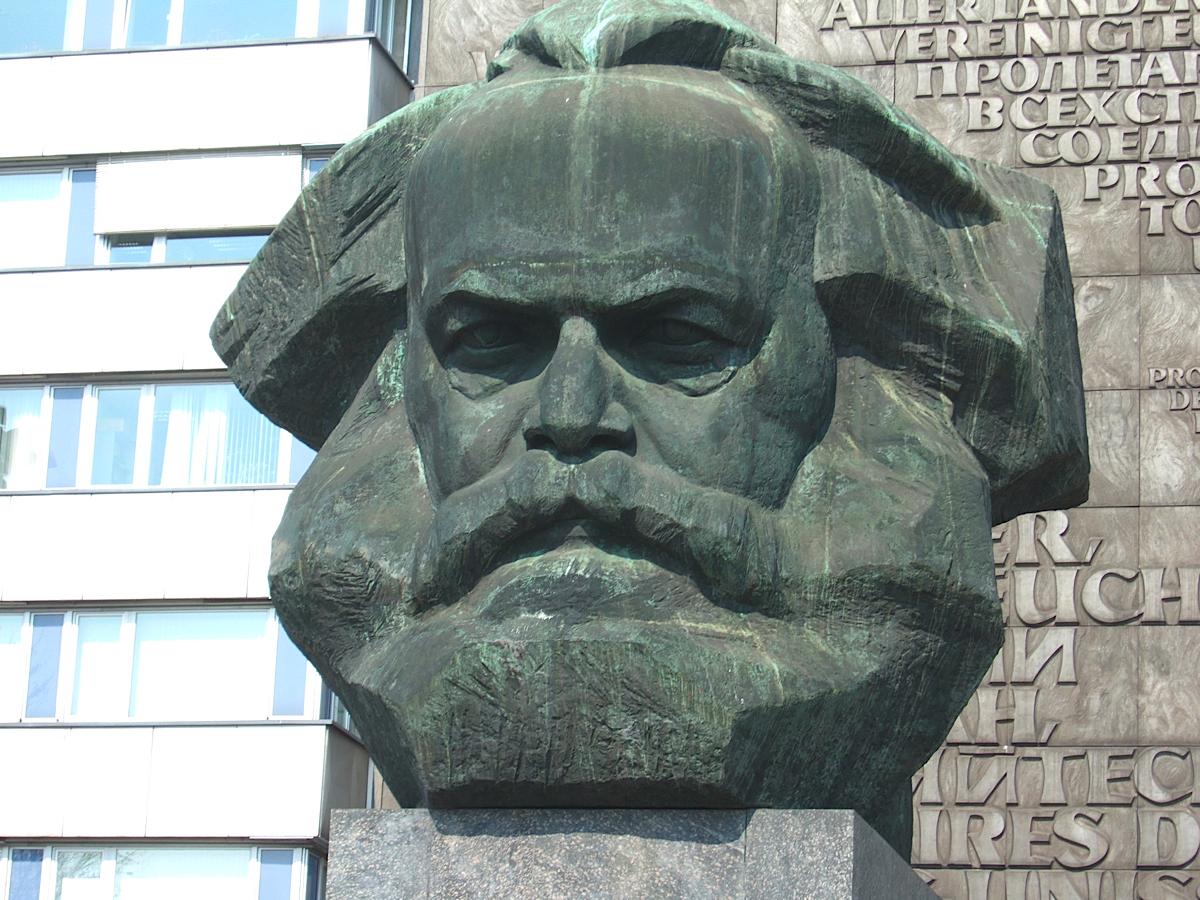
According to the great German philosopher, G.W.F. Hegel, "the human spirit wins its truth, when, in utter dismemberment, it finds itself".  Lesser philosophers often make cryptic statements like this with little concern for how they will be interpreted; but, not Hegel.  Hegel has given us lengthy books meticulously explaining what he meant by this claim.  As the founder of the discipline of critical theory, a discipline that teaches students how to think critically, and question authority, Hegel would surely give the following interpretation to his claim.  People learn best and achieve excellence most often when they struggle with the content of their learning.  Let me explain.

Some people believe that students should not question their teachers and the truths that they purport to communicate.  

Consider two situations.  Imagine that a college freshmen fresh out of high school walks into a college level algebra class and begins to disrupt the professors lectures with his challenging questions.  Some might think that this probity of the student ought to be squashed immediately.  

Now, imagine another case.  An untraditional American teen decides to skip college altogether and take a job working under the sun as a roofer.  As an apprentice, some might think that it would be quite impudent for this boy to challenge and question the job foreman's methods of laying shingle. Surely, this sort of question would only halt production and slow economic growth for the company.  

However, in both situations, there are strong reasons to believe that the students are providing an excellent opportunity not only for themselves, but for their elders that have years of experience to share.  On the one hand, by questioning the algebra instructor or the expert roofer, the student exposes his own ignorance and paves the way for the instructor to obviate this glaring lack in their pupil.  On the other hand, it provides an excellent opportunity for the instructor to renew their passion for their field by rehearsing their immense knowledge and expertise.  Surely, it would be a sad state of affairs if the elders in a community were unwilling to help the younger generation in their efforts to grow and ultimately develop the "company".  We can, then, dismiss the alternative to questioning authority.  

But, what, then, are the reasons for maintaining that students ought to question what they are taught?  As the previous examples demonstrate, it must be the case that questioning received wisdom helps to solidify knowledge and increase skill.  And this is exactly what Hegel meant in his cryptic claim that we win our truth in our struggle.  Think back to a time when you personally may have struggled with a difficult math problem or a problem of organizing a home.  Without a doubt, by struggling with the content of your beliefs and the beliefs of others about how the problem should be solved, you firmly encoded into your mind various solutions, and sometimes their pitfalls, and in this way, paved the way for your own unique and artful solution.  This, then, is the strong reason why we should always accept the challenges of students.  They are, first and foremost, and may I add, admittedly, learners.  They are, therefore, in the business of finding out their problems, and solving their problems.  If we are unwilling to help them by allowing them to challenge our claims, then we are certainly bad neighbors and educators.  And in that case, we would not be able to hold ourselves up as examples of excellence in human development.  

Wednesday, October 16, 2013

Argument Task timed 30 minutes

The following appeared in a memo from the new vice president of Sartorian, a company that manufactures men's clothing.
"Five years ago, at a time when we had difficulty obtaining reliable supplies of high-quality wool fabric, we discontinued production of our popular alpaca overcoat. Now that we have a new fabric supplier, we should resume production. Given the outcry from our customers when we discontinued this product and the fact that none of our competitors offers a comparable product, we can expect pent-up consumer demand for our alpaca coats. This demand and the overall increase in clothing prices will make Sartorian's alpaca overcoats more profitable than ever before."
Write a response in which you examine the stated and/or unstated assumptions of the argument. Be sure to explain how the argument depends on these assumptions and what the implications are for the argument if the assumptions prove unwarranted.

There are at least four key questions that need to be addressed prior to assessing the Vice-President's message that the company should return to manufacturing the old alpaca coat line.  Without addressing these issues, investors and the board are cautioned against any hasty decisions.

First, the vice president does not clearly state that the company stopped making the overcoat because they did not have reliable suppliers for high quality wool. It very well may be the case that there was a correlation between the company's halt on manufacturing the overcoat and a lack of suppliers for wool; however, this correlation may just be coincidental.  For instance, it may be the case that the company stopped making the overcoat because demand dropped and also because the supply for wool was unreliable; but, this connection does not entail that necessary connection between these two events.  For all we know, the lack of a reliable supplier for wool may have been a blessing in disguise five years ago.  To be blunt, the previous reasons for the halt will be required prior to assessing the vice-president's prediction.

Second, information concerning the materials used in manufacturing the coat is lacking in the vice-president's pronouncement.  Was wool in fact a key material in creating the overcoat?  Unfortunately, we are not given this information.  Consider what would happen if the overcoat contained less than 0.1% wool.  In that case, it just does not seem likely that the reason the company stopped making the coat was because there was a lack in reliable wool.  Prudent advice to an investor required to make a decision on the information supplied by the VP of the company would be to demand more information on the raw materials for the coat.

Thirdly, styles change rapidly.  A general rule of thumb in the fashion industry is that last year's demand is not reliable indicator for this year's consumer desire. Bringing a style back from the past requires much more than simply placing it on the shelf.  Advertising and marketing ideas must be prudently developed and released to the pubic.  Imagine what would happen if a major retail chain attempted to, in one full swoop, bring back the top hat from the early 19th century.  It's just not likely that styles can survive their grave.  Prior to making a decision, investors and the board of the company must gather input from the marketing teams at work in the company.

Lastly, does the new fabric supplier carry the raw materials needed for the coat?  Of course, the implication of the VP is that the new supplier is critical in our plans to bring the overcoat back onto the market, but consider what might happen if the new supplier does not even carry the product to meet our needs.  In that case, our past efforts involving the marketing team would be in vain, and the time investing in bring the coat back to life would surely be wasted.

Prior to making a decisions regarding the message, the company is cautioned against approving the imperative of the Vice President to bring back the 5 year old clothing line.


Tuesday, October 15, 2013

Vocab

August (adj.) solemnly grand; sublime; majestic
  • The ancient Philosophers look'd upon this Universe as one August Temple of God.--H. More, 1664
  • There is generally in Nature something more Grand and August, than what we meet with in the Curiosities of Art.--J. Addison, 1712

Disaffect (v.) to lack affection for; to dislike 
  • Zarathustra's disaffection directed toward the two party system of his home country was coupled with his disaffect for the cultural hegemony of anti-intellectualism at home; subsequently, he moved into the mountains and lived among the wild goat and sheep.  

Egregious (adj.) prominent; remarkable in the bad sense: gross; flagrant; outrageous.  

  • The amount of waste created by some savages in the developed world is an egregious insult to the conscientious naturalist.  

Jaunty (adj.) easy and lively in manner; well-bred liveliness 
  • Levi was playful as a pup, and his back story painted him as a jaunty dog filled with life and springing from good genes.  

Waggish (adj.) like a wag (n.) a mischievous boy
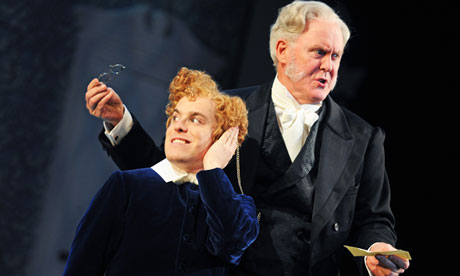
  • In the play, The Magistrate, John Lithgow's character plays alongside a character by the name of Cis Farringdon, a waggish boy who does not know his real age.  

Euphony (n.) the quality of having a pleasant sound 
  • The euphonic elements of Ludovico Einauldi's newest composition are in stark contrast to the popular new releases of Miley Cyrus and Korn.  

Ebulliency (n.) the quality of being ready to boil, bubble-over, or overflow; also of drugs ebullient (adj.) producing agitation or heat 
  • As the heroin addict light the flame underneath the spoon, he eagerly awaiting the ebulliency of his chemical preparation and the ebullient rush he would receive after an injection.  

Lambasted (v.) to beat; thrash (from lam-baste, both meaning to beat soundly)
  • In the early morning hours of January 1, 2009, not only did BART police lambast Oscar Grant; tragically, they shot him dead.  


Foment (v.) to promote the growth of; to encourage or stimulate the development of; also to bathe with warm or medicated lotions 
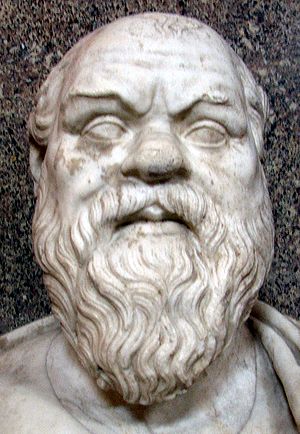
  • Socrates was unjustly accused of fomenting corruption among the youth of Athens; not unjustly accused, some of the wealthy Athenian men were certainly fomenting young boys in the bathe houses of Athens.  

Perfidious (n.) guilty of breaking faith or violating confidence; perfidy (n.) untrustworthy; deceitful 
  • The lawyer brought in character witnesses to assassinate the testimony of several key witnesses to the murder; afterwards, it was not at all possible to see any untainted by perfidy.

Monday, October 14, 2013

Vocab

Torrid (adj.) scored; burned; exposed to great heat (esp. in the torrid zone, the region between the tropics)

  • In the tropic zone, where the heat does burn, I found my blackened soul, charred, making its home among the inhabitants, dark as coal.   

Perseverate (v.) the verb form of perseveration (n.) the act of persevering; persistence (esp. in the psychological sense of continue an action even in the absence of stimulus)

  • After several attempts, the hungry little mouse perseverated and furtively dined on a block of cheese.


Mitigate (v.) to alleviate or give relief from; to inhibit or counteract; to lessen the trouble caused by 
  • Lighten any check, mitigate the destruction ever so little, and the number of the species will almost instantaneously increase to any amount. --Charles Darwin, Origin of Species 


Contention (n.) strife; the act of striving together in opposition
  • Ingmar Bergman's movie Persona dramatizes the contention between two aspirants when only one role is available and each repudiates the others claim to the role. 

Mellifluous (adj.) flowing with honey-like substance; sweetened with honey; (fig. pleasant sounding; flowing; musical)
  • Economist 20 July (Review Suppl.) 11/1   A visitor to Germany..is bound to notice the presence, in almost every small town, of a local Brauerei whose mellifluous product is available in the neighbouring inns.
  • Not only was Pooh a honey-loving bear, but as heard on the radio, his mellifluous voice soothed many anxious children awaiting Christmas during the early 90's. 

Truculent (adj.) savage; cruel; fierce; ferocity 
  • It is commonly believed that the Yanomami people in the Amazon rainforest are one of the more truculent indigenous peoples and that internal and external warfare is a quotidian aspect of their life.  
Quittance (n.) the action of freeing from a debt
It is highly unlikely that the truculent state of affairs in the middle east will cease without universal quittance from past wrongs and adoption of neighborly norms on all sides.  

Exigent (adj.) requiring immediate action of aid; pressing (n.) state of pressing need
  • Money and all that it symbolizes has obviated the exigent demands of being an animal; instead of seeking shelter, or food, or warmth, man in a symbolically saturated marketplace is driven by the impatient desire for capital.  

Aggrandize (v.) to make greater; to increase; to increase the power, status or wealth 
  • By social capital, I mean the products that are used by people to aggrandize their self-image in their own mind and the perception of others.  Such social capital is adorned on the body, such as a watch or ring, or advertised through speech, such as the brusque mention of degrees of higher learning.  Social capital can bolster relationships and aggrandize their productive capacity for the user.  There is no image for social capital because other authors complicate it by situating the concept within an abstract philosophical space.  Social capital is primarily the result of treating identity as a tradable commodity.  It violates the norm of authenticity since it uses aspects of identity in a mechanical way to secure or repudiate access to others of valued goods.  As such, social capital is abject bastard product of consumer capitalism, and the domination in social relationships of metaphors related to money.  


Friday, October 11, 2013

Vocab


  • Arrogate (v.) To claim and assume as a right that to which one is not entitled; to lay claim to and appropriate (a privilege, advantage, etc.) without just reason or through self-conceit, insolence, or haughtiness.
    • The current government in the United States has arrogated to themselves far too much power over our personal life.  
  • Dogged (adj.)  This word seems to have 2 senses in use.  The first sense is negative and it means "having an air of sullen obstinacy"; the second sense is neutral and means "having the tenacity or characteristic persistence of some breeds of dogs"
    • Hoping to increase his store's revenue, the dogged sales clerk obdurately performed his chicanery on every person that walked in the door. 
  • Consummate (v.) to bring to completion; to finish; to accomplish; also, to make a marriage complete by act of sex 
    • The graduation ceremony consummated the man's long struggle with learning.
  • Dissension (n.) disagreement in opinion, especially that which brings strife or contention 
    • The dissension in the United States stems partly from the lack of modesty on behalf of the atheistic science community and partly on the educated--albeit reticent--theistic citizens.
  • Obeisance (n.)  Homage or submission to a person in authority; deference towards an acknowledged superior; respectfulness of manner or bearing. 
    • In an attempt to demand obeisance from the young man, the older gentlemen treated his personal narrative on the art world as a picayune anecdote to their otherwise important conversation about the cost of paintings.
  • Extirpate (v.) to root out, to exterminate, to totally destroy (used with of and from)
    • Capitalists set up puppet democracies in an attempt to extirpate from the minds of the people any alternative to capitalism. 
  • Panegyric (n.) a person who writes a eulogy; a speech in praise of something or someone 
    • Ludovico Einauldi's newest album seems to my ears to be a panegyric hymn to the interminable strength of the human spirit and will.  
  • Veracity (n.) the quality of trustworthiness as manifested in a person or individual (used with of)
    • It is quite rare to find veracity of businessmen in competitive markets.  
  • Enervate (v.) to weaken physically 
    •  The alcoholic beverage enervated my mind.  

Thursday, October 10, 2013

Vocab Building


If you have found this blog because you are preparing for the GRE, then I want to recommend something that I wish I would have found about 30 days ago, when I seriously started working on my vocabulary.  Access the Oxford English Dictionary online edition via your schools library.  For me, it was simply, I went to my schools library webpage, did a search for the OED, found the link, typed in my library ID number and password and I was on the OED online.  The entries are so much better than dictionary.com or websters.com.  The OED is not only more detailed, it gives interesting information about the
  • Dilatory (adj.) tending to cause delay; made for the purpose of delaying time or deferring decision or action
    • The computer was created for quite the opposite of dilatory role it now serves in many consumer's lives.  
  • Melancholy (n.) a mood state of sadness, introspection, or dejection 
    • Mournful: expressing sorrow; inducing sadness
    • Plaintive: expressing sorrow or melancholy 
      • Soporific: tending to cause sleep
      • Quiescent: not active or activated; in a state of repose 
      • Torpor: state of rest or hibernation 
        • The funeral induced melancholy, which the children counterattacked by smoking marijuana.  
  • Middling (n.) a middle thing, a median (adj.) of moderate quality 
    • The middling hours after awakening but before working are the best time, in my opinion, to relate to your significant other.  This is the time during which you can express love and dedication and let your partner know that your thoughts are with them while you are away at work.  
  • Squall (n.) a discordant or violent scream 
    • Despite my attempt to obviate noise, the obnoxious squall of the woman at Dunkin' Donut's was penetrating through my ear plugs.  
  • Rapacious (adj.) inordinately given to taking; gluttonously greedy  
    • The rapacious hands of the children grabbed at the candy from the unattended basket. 
      • Notice how I'm using the word in a figurative sense since it is not their hand that are rapacious but their appetites, their minds, or their personalities.  
  • Inordinate (adj.) not 'ordered'; not regulated, controlled, or restrained 
    •  Inordinate time is wasted with frivolous actions, usually of a dilatory nature.   
    • Perhaps a physiological illness in itself, an inordinate appetite is surely the cause of some cases of obesity.
  • Salubrious (adj.) favorable or conducive to health 
    • Fruits and vegetables are salubrious foods made by God for his creatures.   
  • Irascible (adj.) easily provoked to anger; hot-tempered; passionate 
    • My irascible friend Brittney often finds reasons to burnish her vituperation against sensitive soul  
  • Dirge (n.) a song sung at the burial of, or in commemoration of the dead; a song of mourning or lament 
    • Dirge at an end, the departed is placed in the funeral bed (Virgil's Aened).
  • Onerous (adj.) of the nature of a burden; burdensome; troublesome 
    • To some police officers its an onerous task, but Officer Schoolcraft enjoys walking the beat.  


Monday, October 7, 2013

Lexicon

  • Clement (adj.) lenient; compassionate 
    • The clement father forgave his daughter easily.
  • Meet (v.) to come together (n.) an assembly where people come together as in a "track meet"
    • The woman arranged to meet with her father for the first time at a neutral coffee shop.
  • Condign (adj.) well deserved; fitting; adequate
    • Since the defendant was remorseless after having admitted to first degree murder, most agreed that the judge's ruling of a life-time sentence with no parole was condign albeit perhaps even a bit clement.  
  • Jocund (adj.) cheerful; merry; gay; blithe
    • I would like to be described by the people that know me as jocund.  My dog Levi is jocund
    • Levi is jocund.
    • Levi is jocund!
  • Recondite (adj.) requiring special knowledge to be understood
    • The vocabulary of Fodor and Palmarini's critique of simple minded Darwinism is recondite, albeit once the terms of the debate are understood, it is a very rewarding read.
  • Metonym (n.) a figure of speech in which a word that designates one thing or concept is used for something that is closely related to it, i.e. "to count heads" for "to count people" 
    • Lakoff and Johnson distinguish between a metonym and a metaphor.  While both provide tools for understanding phenomena, a metonym is special in that it coordinates between essential parts of things and the whole of a thing.  For instance, a good example of a metonym is the following sentence.  "I counted heads and one is missing."  "Heads" in this context functions as a metonym in that it refers to individual people, but uses the word head to make the reference. 
    • The difference between metonym and metaphor is that when people use a metonym they typically do not intend to transfer properities concerning the source concept to the transfer concept; whereas in metaphor, people do tranfer properties of the source to the transfer.  So, for instance, I might use "the crown" to refer to the king, but I don't think and intend for there to be any transference of crown-like properties to the king.  But, if I say, "my father rules the house with my mother as the queen", then I do intend for some properties of kings to be tranfered when thinking about my father, which rules the house as a king and has a queen, my mother, for his bride.  
  • Synecdoche (n.) a figure of speech in which the part is used to name the whole or the whole is used to name the part
    • Lakoff and Johnson group synecdoche and metaphor together.  However, some people believe that there is a fine grained distinction between the two concepts.  The example given earlier of "counting heads" is actually an example of synecdoche.  My dad gave me  a set of wheels.  Here, "set of wheels" is a part of a car, and is used to refer to the thing of which it is a part.  
  • Homonym (n.) a word that is pronounced the same as another word but differing in meaning 
    • Sail and sale are homonyms since they sound alike but differ in meaning. 
  • Pugnacious (adj.) inclined to quarrel or fight; quarrelsome; belligerent 
    • My pugnacious mother made it difficult for my father to stick around during my childhood. 
  • Stalwart (adj.) strong or stoutly built; sturdy
    • The stalwart cabin in the forest withstood the fierce winters resolutely.
  • Doughty (adj.) steadfastly courageous and resolute 
    • The doughty hiker fought past the torrential downpour and mudslide to make it to the end of the trail.
    • The witch goddess Circe fell in love with the doughty Odysseus and had him stay with her for a full year of feast before he was sent back to Itacha.  
  • Intractable (adj.) not easily controlled or directed; stubborn; obstinate
    • Levi is an intractable dog; but with some patience and care, instead of controlling him, one can learn to work with him as a team member.  
  • Opprobrium (n.) the negative feeling (disgrace or reproach or blame) incurred as a result of shameful behavior 
    • The opprobrium experience by the parents of Miley Cyrus after her tweaking episode must have been colossal.  
  • Invective (n.) vehement or violent accusation; vituperation 
    • The invective speech against President Obama's healthcare reform plan performed by Ted Cruz in front of Congress caused considerable outrage among the American people and Cruz's constituents.  He would be smart to avoid such vituperative claims in the future.   
  • Beguile (v.) to charm, divert, take away from something with trickery 
    • The little girl beguiled the candies form her mother, pleading with her big brown eyes.
  • Cloy (adj.) 
    • I tend to cloy after I eat just a few chocolates or sweets.  As a child I did not always have this problem, my desire for both was intractable.
  • Cant (n.) speech that is insincere; or speech based on a private lexicon 
    • The attractive girl's cant was not appreciated by the boy who had worked up the courage to ask her to the prom.
  • Plaintive (adj.) expressing sorrow or melancholy
    • Henryk Gorecki's album Misere is a plaintive gesture toward the brutal fact of our mortality.  
  • Arresting (adj.) capable of attracting interest
    • The street performers drumming was arresting.
  • Attract (adj.) having the power of attracting 
    • Although the drums could attract, the street performer was unskilled and could not fetch a crowd.  
  • Intriguing (adj.) strongly captivating 
    • By making his single drum sounds like 10 drums, the intriguing street drummer captured a large crowd.